

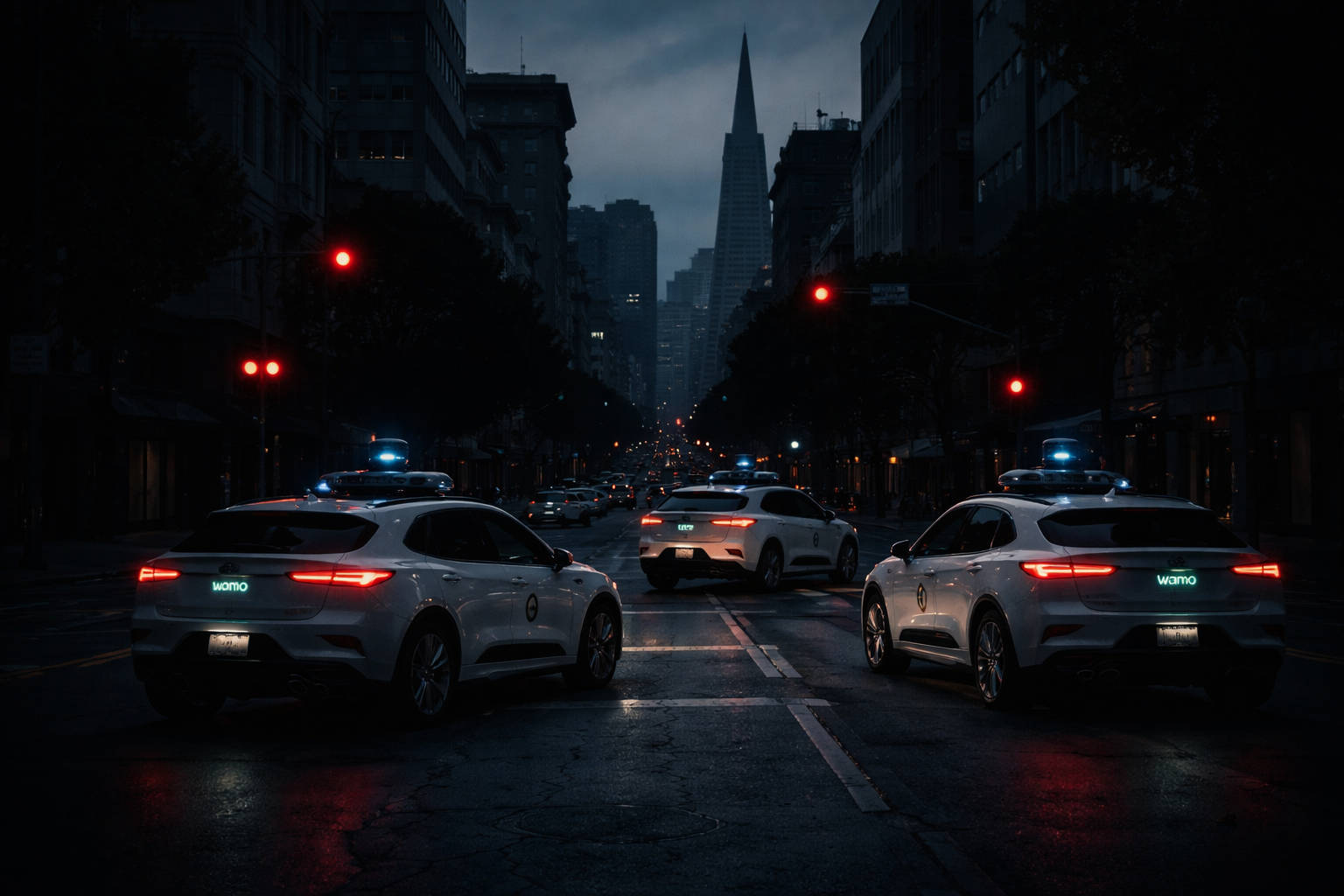
Waymo said it will update its automated driving software to better manage large-scale power outages similar to the San Francisco blackout to reduce delays when multiple vehicles require human oversight at the same time.
An electricity failure in San Francisco last weekend exposed how self-driving taxi systems respond under citywide stress.
Automated vehicles operated by Waymo were left immobilised at intersections after traffic signals went dark, contributing to congestion at a time when officials were already urging drivers to avoid the roads.
The incident followed a major power disruption that swept across large parts of the city and triggered scrutiny of how autonomous fleets cope with infrastructure breakdowns.
Power outage disruption
The disruption followed a fire at a substation operated by PG&E Corp., which caused power failures across San Francisco over the weekend.
At its peak, the outage affected about 130,000 customers, according to information released by the utility and city officials.
The blackout knocked out thousands of traffic signals across the city, forcing drivers to navigate intersections without standard visual cues.
Social media footage from the weekend showed several Waymo vehicles stopped in the middle of roads with hazard lights flashing, leading to long queues of traffic behind them.
As the situation escalated, city authorities advised motorists to stay off the streets.
Waymo suspended its service while the power failure continued to disrupt normal traffic conditions.
Why automated cars couldn’t handle the blackout
Waymo, which is owned by Alphabet Inc., said its automated driving software is designed to treat dark traffic lights as four-way stops.
Under normal circumstances, vehicles can navigate these intersections without intervention.
According to the company, the cars successfully handled around 7,000 traffic signals that were not functioning during the outage on Dec. 20.
However, the scale of the blackout created a concentrated surge in situations where vehicles sought additional confirmation before proceeding.
These confirmation checks are designed to ensure safe decision-making in complex environments.
The sudden increase in such requests slowed response times, leaving some vehicles stationary while awaiting clearance.
This delay contributed to the traffic jams captured in online videos.
As conditions worsened, Waymo halted operations in the affected areas.
The company said the decision was taken after city officials asked drivers to stay off the roads, reflecting broader safety concerns during the outage.
The pause in service was intended to limit further congestion and reduce risks at already strained intersections.
The incident highlighted the operational challenges autonomous vehicle operators face during rare but severe infrastructure failures.
Software and emergency updates
Waymo said it is now working to integrate more regional power outage context into its software.
This is intended to allow vehicles to move through affected intersections more decisively when widespread outages occur.
The company is also coordinating with San Francisco officials, including Mayor Daniel Lurie, to refine emergency response protocols.
In addition, Waymo plans to update training for first responders so they can more effectively manage situations involving autonomous vehicles during emergencies.
The company said these measures aim to improve coordination and reduce delays if similar events occur in the future.
The post Waymo to strengthen fleet software after power outage caused traffic jams appeared first on Invezz